Challenges in the Industrial Solar Solutions Installations in Pakistan
Pakistan has seen significant growth in solar energy adoption due to rising electricity costs, unreliable grid supply, and a push for sustainable power generation. The industrial sector, the largest electricity consumer, is poised to benefit the most from solar installations, which can reduce fossil fuel reliance and lower operational costs. However, challenges hinder the widespread adoption of industrial-scale solar solutions. Despite government initiatives and incentives, barriers exist from economic, technical, infrastructural, regulatory, and socio-cultural perspectives that need to be addressed for the sector to realize its potential in Pakistan.
Read Also: Seasonal Maintenance Guide for Solar Systems
بجلی کی بڑھتی ہوئی قیمتوں، گرڈ کی غیر معتبر فراہمی، اور پائیدار بجلی کی پیداوار کے لیے زور کی وجہ سے پاکستان نے شمسی توانائی کو اپنانے میں نمایاں اضافہ دیکھا ہے۔ صنعتی شعبہ، جو بجلی کا سب سے بڑا صارف ہے، شمسی تنصیبات سے سب سے زیادہ فائدہ اٹھانے کے لیے تیار ہے، جس سے فوسل فیول پر انحصار اور آپریشنل لاگت کم ہو سکتی ہے۔ تاہم، چیلنجز صنعتی پیمانے پر شمسی حل کو وسیع پیمانے پر اپنانے میں رکاوٹ ہیں۔ حکومتی اقدامات اور ترغیبات کے باوجود، اقتصادی، تکنیکی، بنیادی ڈھانچہ، ریگولیٹری، اور سماجی و ثقافتی نقطہ نظر سے رکاوٹیں موجود ہیں جن کو دور کرنے کی ضرورت ہے تاکہ اس شعبے کو پاکستان میں اپنی صلاحیتوں کا ادراک کیا جا سکے۔
Economic Challenges
The main obstacles to industrial solar installations in Pakistan include high upfront costs for equipment and setup, which can range from millions to tens of millions of Pakistani rupees. Despite a global decline in solar panel prices by about 89% since 2010, local costs are affected by import duties and currency fluctuations. Limited financing options from banks, high interest rates, and difficulties faced by small and medium-sized enterprises (SMEs) hinder investment in solar energy. Additionally, variable energy tariffs and subsidies on grid electricity extend the return on investment (ROI) for solar systems, making them less economically attractive compared to cheaper alternatives like natural gas or diesel generators. Economic feasibility studies indicate that without subsidies or tax breaks, solar systems struggle to compete effectively.
Technical and Installation Challenges
The deployment of industrial solar systems in Pakistan faces several technical barriers:
- Climate Challenges: Dust accumulation in arid regions can reduce panel efficiency by 20-30%, and high temperatures degrade performance.
- Structural Concerns: Many older industrial buildings cannot support the weight of solar panels, necessitating costly reinforcements.
- Installation Issues: Lack of standardized practices leads to suboptimal site choices, with shading reducing energy output. Ground-mounted systems struggle with land availability.
- Technological Integration: Advanced systems like hybrid solar and wind require engineering expertise that is often lacking locally.
- Maintenance Difficulties: Regular inspections are needed, but supply chain disruptions for spare parts can cause extended downtimes.
Challenges in Industrial Solar Installations
Key barriers slowing down large-scale solar adoption in Pakistan’s industrial sector — grouped for clarity and impact.
Economic Challenges
- High upfront capital costs
- Rupee depreciation & import duties
- Long ROI without subsidies
- Expensive alternatives still preferred
Technical & Installation
- Dust & high temperature losses
- Non-standard installation practices
- Lack of skilled engineers
- Maintenance & spare part delays
Structural Limitations
- Weak or old rooftops
- Asbestos & sheet roofing
- Insufficient usable roof area
- Costly reinforcements required
Grid & Infrastructure
- Unstable grid conditions
- Transformer overloading
- Voltage fluctuations
- Net-metering delays
Policy & Regulation
- Frequent tariff changes
- Unclear long-term policies
- Bureaucratic approvals
- Security & regional risks
Supply Chain Issues
- Heavy reliance on imports
- Currency & shipping risks
- Quality inconsistency
- Limited local manufacturing
Environmental Factors
- Dust accumulation
- High summer temperatures
- Monsoon-related output drops
- Increased cleaning costs
Awareness & Financing
- Limited solar-specific loans
- SMEs lack access to capital
- ROI misconceptions
- Fear of operational disruption
Grid Integration and Infrastructure Issues
Pakistan’s aging power grid poses challenges for industrial solar solutions due to high transmission and distribution losses of 18-20% and frequent outages. Reliable grid-tied systems are complicated by the need for backup power and energy storage, increasing costs. While net metering allows feeding excess solar energy back into the grid, delays and inconsistent implementation hinder progress. The rise in solar installations has caused grid instability, with issues like peak demand shifts and transformer overloads. Urban areas experience voltage fluctuations, while rural regions face financial difficulties in grid extension, leading to a reliance on off-grid solar. Additionally, electricity theft and non-payment issues undermine grid reliability, raising overall tariffs.
Policy and Regulatory Hurdles
The solar sector in Pakistan faces regulatory inconsistencies, with uneven implementation of the 2019 Renewable Energy Policy, which targets 30% renewable energy by 2030. Frequent tariff and subsidy changes create uncertainty for investors, and recent net metering reforms have discouraged industrial adoption. Bureaucratic delays in permit acquisition from the Alternative Energy Development Board can stall projects. Overlapping responsibilities between federal and provincial authorities lead to coordination issues, while import duties on solar equipment increase costs despite some project exemptions. Security concerns, particularly in regions like Balochistan, also pose risks for solar installations and deter investment.
Supply Chain and Quality Issues
The solar components supply chain in Pakistan is vulnerable to global disruptions, particularly due to reliance on Chinese imports, which account for over 80% of the panels. There are issues with quality control, resulting in premature failures that can be costly in industrial applications. Local manufacturing is limited, leading to reduced self-reliance and exposure to currency risks.
High Initial Capital Costs
The main barrier for industries considering solar power is the high upfront investment, which includes costs for large-scale solar panels, high-capacity inverters, advanced monitoring systems, and structural mounting. Despite a global decrease in costs, the depreciation of the Pakistani Rupee and reliance on imported components keep prices high. Many industrial units face budget constraints due to inflation and financial instability in the economy.
Dependence on Imported Equipment
Pakistan’s solar sector is largely dependent on imported parts, including:
- PV modules
- Inverters
- Batteries
- Mounting structures
This reliance exposes the whole system to risks associated with changes in foreign exchange rates, strict import rules, and extended shipping delays. Supply chain interruptions triggered by global circumstances (such as pandemics or geopolitical conflicts) can additionally prolong project schedules and raise expenses.
Limited Local Manufacturing and Technical Expertise
The local production of solar components is still quite low. Consequently:
Industries are unable to take advantage of local warranties or after-sales services.
- Spare parts frequently need to be imported, raising both downtime and maintenance costs.
- The number of highly skilled engineers and technicians is restricted, resulting in varying installation quality nationwide.
- A lack of a specialized workforce creates difficulties in maintaining long-term efficiency and reliability of systems.
Grid Integration Challenges
Integrating extensive solar systems with Pakistan’s national grid poses various technical challenges:
- Grid instability in numerous areas impacts the performance of the system.
- The limited capacity at overloaded grid stations limits the approval of net-metering.
- Frequent fluctuations in voltage can harm delicate solar equipment.
- Prolonged processing times for net-metering discourage industrial adoption.
These issues lead to inefficiencies and deter industries from fully transitioning to solar-based production.
Roof Structural Limitations
Industrial buildings differ in age and construction standards. Not every roof can support the installation of solar panels. Typical structural challenges include:
- Fragile or old rooftops
- Asbestos or sheet roofing that is unable to bear weight
- Uneven or misaligned surfaces
- Insufficient open roof area because of vents, chimneys, or equipment
- In numerous situations, industries need expensive structural upgrades before they can install solar systems.
Lack of Government Incentives and Policy Instability
Pakistan’s solar energy landscape faces challenges despite the existence of policy frameworks like net-metering. Key issues include:
- Absence of tax relief for industrial solar installations
- Lack of subsidies or financing schemes
- Unstable long-term energy policies
- Frequent regulatory revisions, such as changes in net-metering tariffs, create uncertainty for investors and hinder confidence in long-term solar investments.
Weather and Environmental Factors
The climate in Pakistan varies considerably across different areas, and environmental factors can influence solar performance:
- Dust build-up decreases the efficiency of solar panels.
- In certain panel types, high summer temperatures can lead to a decrease in output.
- The monsoon season causes a decline in solar radiation levels.
Routine cleaning and maintenance are crucial but raise operational expenses.
Insufficient Financing Options
Numerous commercial banks in Pakistan are reluctant to provide financing for large-scale solar initiatives because of:
- Elevated perceived risks
- Absence of loan products tailored for solar projects
- Inadequate collateral offered by industries
Read Also: Climate Change Impact on Pakistan Solar Energy Production
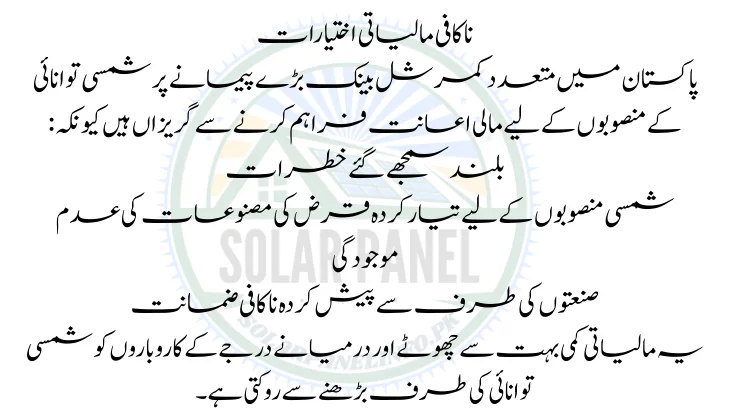
This financing shortfall hinders many small and medium-sized businesses from moving towards solar energy.
Awareness and Misconceptions
Many industrial owners still do not fully understand the following aspects:
- Sustainable cost reductions over time
- Timeframes for return on investment
- Necessary maintenance activities
- Durability of systems
Beliefs—like the idea that solar energy negatively impacts factory efficiency or necessitates battery use—serve as mental obstacles.
Conclusion
Industrial solar solutions in Pakistan have significant potential to lower energy expenses, enhance energy reliability, and promote sustainable development. However, the broad acceptance of these solutions is obstructed by financial limitations, technical challenges, regulatory ambiguities, and infrastructural issues. Overcoming these obstacles through consistent government policies, better financing alternatives, local production, and the development of a skilled workforce can speed up the shift toward solar energy in industries. With effective planning and collaborative efforts from both the public and private sectors, Pakistan can achieve remarkable industrial efficiency and secure long-term energy independence through solar power.
پاکستان میں صنعتی شمسی حل توانائی کے اخراجات کو کم کرنے، توانائی کی بھروسے کو بڑھانے اور پائیدار ترقی کو فروغ دینے کی قابل قدر صلاحیت رکھتے ہیں۔ تاہم، ان حلوں کی وسیع قبولیت میں مالی حدود، تکنیکی چیلنجز، ریگولیٹری ابہام، اور بنیادی ڈھانچے کے مسائل کی وجہ سے رکاوٹ ہے۔ حکومت کی مستقل پالیسیوں، بہتر مالیاتی متبادلات، مقامی پیداوار، اور ہنر مند افرادی قوت کی ترقی کے ذریعے ان رکاوٹوں پر قابو پانا صنعتوں میں شمسی توانائی کی طرف منتقلی کو تیز کر سکتا ہے۔ سرکاری اور نجی دونوں شعبوں کی جانب سے موثر منصوبہ بندی اور باہمی تعاون کی کوششوں سے، پاکستان قابل ذکر صنعتی کارکردگی حاصل کر سکتا ہے اور شمسی توانائی کے ذریعے طویل مدتی توانائی کی خودمختاری حاصل کر سکتا ہے۔
FAQ’s
Why is industrial solar adoption slow in Pakistan?
Industries face high upfront costs, limited financing options, regulatory uncertainty, and technical issues like grid instability and structural limitations.
Is solar energy financially beneficial for industries in the long run?
Yes. Despite high initial investment, solar reduces electricity bills, lowers dependence on the grid, and provides stable long-term savings.
What is the biggest technical challenge industries face when installing solar?
Grid integration and structural issues. Many factories have weak roofs, and unstable grid conditions complicate net metering and system performance.