Pakistan Government Incentives & Policies for Solar System Installations
The Pakistan Government is encouraged to enhance incentives for solar energy to address energy shortages and rising costs. By Jan 2026, solar capacity has exceeded 6 GW due to grassroots efforts. Key initiatives include tax breaks and net metering, which has driven growth in rooftop solar since its introduction in 2015. A 2019 policy aimed for 30% renewable energy by 2030, and by 2024, there was a significant increase in net metering beneficiaries. Off-grid solar subsidies have also supported rural areas, establishing solar as Pakistan’s most viable renewable energy option.
Read Also: Government Solar Panel Scheme in Pakistan
حکومت پاکستان کی حوصلہ افزائی کی جاتی ہے کہ وہ توانائی کی قلت اور بڑھتی ہوئی لاگت سے نمٹنے کے لیے شمسی توانائی کے لیے مراعات میں اضافہ کرے۔ نچلی سطح کی کوششوں کی وجہ سے جنوری 2026 تک، شمسی توانائی کی صلاحیت 6 GW سے تجاوز کر گئی ہے۔ کلیدی اقدامات میں ٹیکس میں وقفے اور نیٹ میٹرنگ شامل ہیں، جس نے 2015 میں متعارف ہونے کے بعد سے چھت کے شمسی توانائی میں ترقی کو فروغ دیا ہے۔ 2019 کی ایک پالیسی جس کا مقصد 2030 تک 30% قابل تجدید توانائی ہے، اور 2024 تک، نیٹ میٹرنگ سے فائدہ اٹھانے والوں میں نمایاں اضافہ ہوا۔ آف گرڈ سولر سبسڈیز نے دیہی علاقوں کو بھی مدد فراہم کی ہے، جس سے سولر کو پاکستان کے قابل تجدید توانائی کے آپشن کے طور پر قائم کیا گیا ہے۔
Current Policies and Incentives
As of December 2025, Pakistan’s solar framework includes regulatory support and financial mechanisms to reduce entry barriers, centered around a net metering policy. Key components are:
- Net Metering Regulations: Overseen by NEPRA and executed by DISCOs such as LESCO and GEPCO, this program enables users to reduce their bills by sending surplus energy back to the grid.
- Eligibility and Capacity: Accessible to three-phase consumers with installations up to 1 MW, usually ranging from 3 to 25 kW for household users.
- Mechanics: Bi-directional smart meters track both energy imports and exports, providing credits for any excess energy at the National Average Power Purchase Price (NAPPP), which is approximately PKR 27/kWh. These credits can be rolled over, and there is compensation for excess energy accumulated annually.
- Licensing: A simplified approval process that spans 30 working days, with licenses typically lasting for up to 7 years.
- Benefits: Systems generally have payback periods ranging from 3 to 5 years, and by October 2025, net-metered users contributed to a negative fuel charge adjustment (FCA) of PKR 0.65/kWh for consumers.
- Recent Updates: There is a strong focus on ensuring compliance with equipment standards and improving transparency through smart metering.
Tax Exemptions and Subsidies
The 2025 Renewable Energy Policy, coordinated by the Ministry of Energy, AEDB, and NEPRA, includes significant fiscal incentives:
- Import and Sales Tax Relief: Zero customs duties and sales tax on solar panels and equipment for projects up to 1 MW, reducing upfront costs by 15-20% until mid-2025.
- Income Tax Deductions: 100% deductions on solar investments for businesses, leading to substantial tax savings and significant reductions in energy bills (70-80% for a 100 kW system).
Sector-Specific Subsidies
- Residential: Duty waivers for systems up to 25 kW; no taxation on solar energy.
- Commercial/Industrial: Reduced duties for certified EPC firms and hybrid system approvals.
- Agricultural: Subsidies for solar tube wells and irrigation.
- Government Buildings: Required solar integration with full exemptions.
These incentives have positioned solar energy as the “cheapest power source” in Pakistan, with net-metered output expected to reach 174 GWh/month by mid-2025.
Financing Schemes
- To tackle the significant upfront expenses (ranging from PKR 100,000 to 150,000 per kW), the State Bank of Pakistan (SBP) manages the Renewable Energy Financing Scheme.
- It offers low-interest loans (starting at 6%) through banks such as HBL and Meezan, supported by guarantees from the Green Climate Fund.
- The scheme focuses on underserved groups, including households, SMEs, and agribusinesses, facilitating the financing of 43 MW through the Pakistan Distributed Solar Project in 2024–25.
- Applications can be submitted through PEC-approved installers, featuring tax-exempt invoices and a link to net metering.
Provincial Government Initiatives
- Punjab: The province has initiated the solarization of over 4,000 schools, providing a significant boost to educational infrastructure. Additionally, there are programs in place to offer free solar systems for low-income households, along with subsidies specifically designed for tube wells.
- Khyber Pakhtunkhwa (KP): In KP, efforts are focused on the solarization of mosques and government institutions to promote renewable energy. The province is also implementing on-grid rooftop solar projects, which enhance energy efficiency and sustainability.
- Sindh: Sindh is supporting solar home system programs backed by the World Bank, which aim to improve access to electricity. The province is also working on solar electrification initiatives in rural villages, facilitating energy access to underserved communities.
- Balochistan: Balochistan has launched a solar tube wells project aimed at improving agricultural water access. Additionally, off-grid solar systems are being developed for remote communities, providing them with much-needed energy solutions.
Overall, each province is customizing its energy policies to address the specific energy needs and challenges of its localities.
Simplified Solar Installation Approval Procedures
The government has simplified procedures for:
- Net metering requests
- Installation certifications
- Import permissions
- Quality control of solar products
This minimizes the time and documentation required for adopting solar energy.
Rapid Growth of Solar Energy in Pakistan
In 2025, solar energy saw significant growth, adding 2.8 GW in the first ten months and projecting a total of 6.3 GW for the fiscal year. Rooftop solar now contributes 2–3% of total generation, peaking at 300 GWh in summer and helping to reduce fuel costs.
Read Also: NA Rejects 18% Tax on Solar Panels
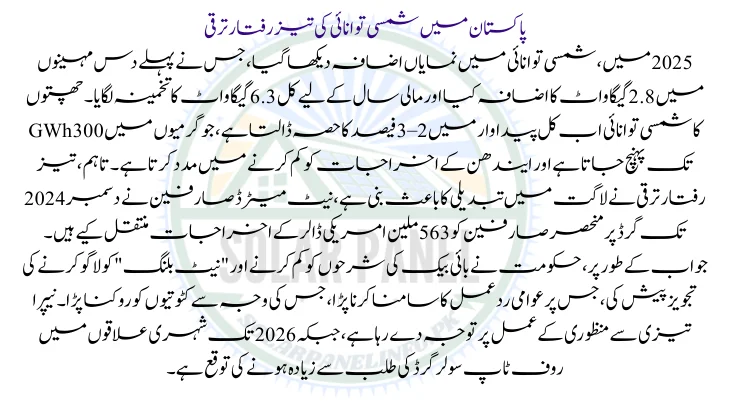
However, rapid growth has led to cost shifts, with net-metered users transferring USD 563 million in expenses to grid-dependent consumers by December 2024. As a response, the government proposed reducing buyback rates and implementing “net billing,” which faced public backlash, leading to a pause on the cuts. NEPRA is focusing on faster approval processes, while rooftop solar is expected to outstrip grid demand in urban areas by 2026.
Challenges and Reforms
Despite notable achievements, several issues remain: Grid infrastructure is not keeping pace with two-way energy flows, leading to “duck curve” scenarios (excess supply during the day, shortages at night); revenue shortfalls for DISCOs fuel discussions around subsidies; and low-quality imports pose safety risks. According to critics, fossil fuel lobbyists have hindered progress in transitions. Reforms focus on providing incentives for battery storage, implementing smart grids, and establishing fair tariffs to ensure that larger users contribute to maintenance costs. The transition to a Competitive Trading Bilateral Contracts Market (CTBCM) seeks to open up the sector, addressing inefficiencies associated with a single buyer.
Future Outlook
Looking to 2026, key policies will focus on sustainability and innovation. Main enhancements include:
- Quality Standards: Stricter certification for panels, inverters, and batteries.
- Net Metering Upgrades: Streamlined approvals and fairer compensation.
- Battery Support: Subsidies for energy storage to enhance resilience.
- Commercial Incentives: Reduced duties and support for smart monitoring tech.
- Local Manufacturing: Incentives to reduce import dependency and create jobs.
These measures align with a goal of 30% renewable energy by 2030 and could result in battery imports of 8.75 GWh, covering 25% of peak demand. There’s significant untapped solar potential, necessitating a balance between growth and equity.
Conclusion
Pakistan’s solar energy sector is growing quickly, driven by government incentives, net metering policies, tax exemptions, and increasing public demand. Although there are challenges like grid limitations, tariff reforms, and quality control, ongoing updates to policies and provincial initiatives are enhancing the renewable energy framework. With improved approval processes, higher standards, and support for battery storage, Pakistan is progressing toward its renewable energy objectives, making solar power more dependable, affordable, and widely available.
پاکستان کا سولر انرجی سیکٹر تیزی سے ترقی کر رہا ہے، جو حکومتی مراعات، نیٹ میٹرنگ کی پالیسیوں، ٹیکسوں میں چھوٹ، اور بڑھتی ہوئی عوامی مانگ کی وجہ سے ہے۔ اگرچہ گرڈ کی حدود، ٹیرف میں اصلاحات، اور کوالٹی کنٹرول جیسے چیلنجز موجود ہیں، لیکن پالیسیوں اور صوبائی اقدامات میں جاری اپ ڈیٹس قابل تجدید توانائی کے فریم ورک کو بڑھا رہے ہیں۔ بہتر منظوری کے عمل، اعلیٰ معیارات، اور بیٹری سٹوریج کے لیے تعاون کے ساتھ، پاکستان اپنے قابل تجدید توانائی کے مقاصد کی طرف بڑھ رہا ہے، جس سے شمسی توانائی زیادہ قابل اعتماد، سستی اور وسیع پیمانے پر دستیاب ہے۔
FAQ’s
What is net metering, and how does it benefit consumers?
Net metering enables solar users to send surplus electricity back to the grid, earning credits on their bills and lowering monthly electricity expenses.
Are there tax benefits for installing solar in Pakistan?
Yes. Solar panels up to 1 MW are exempt from customs duties and sales tax, reducing overall installation costs by 15–20%.
What financing options are available for solar systems?
The State Bank of Pakistan provides low-interest loans (approximately 6%) for households, businesses, and farms to help make solar installations more affordable.