Pakistan vs Sri Lanka Solar Panel Prices: 2026 Cost Comparison + ROI
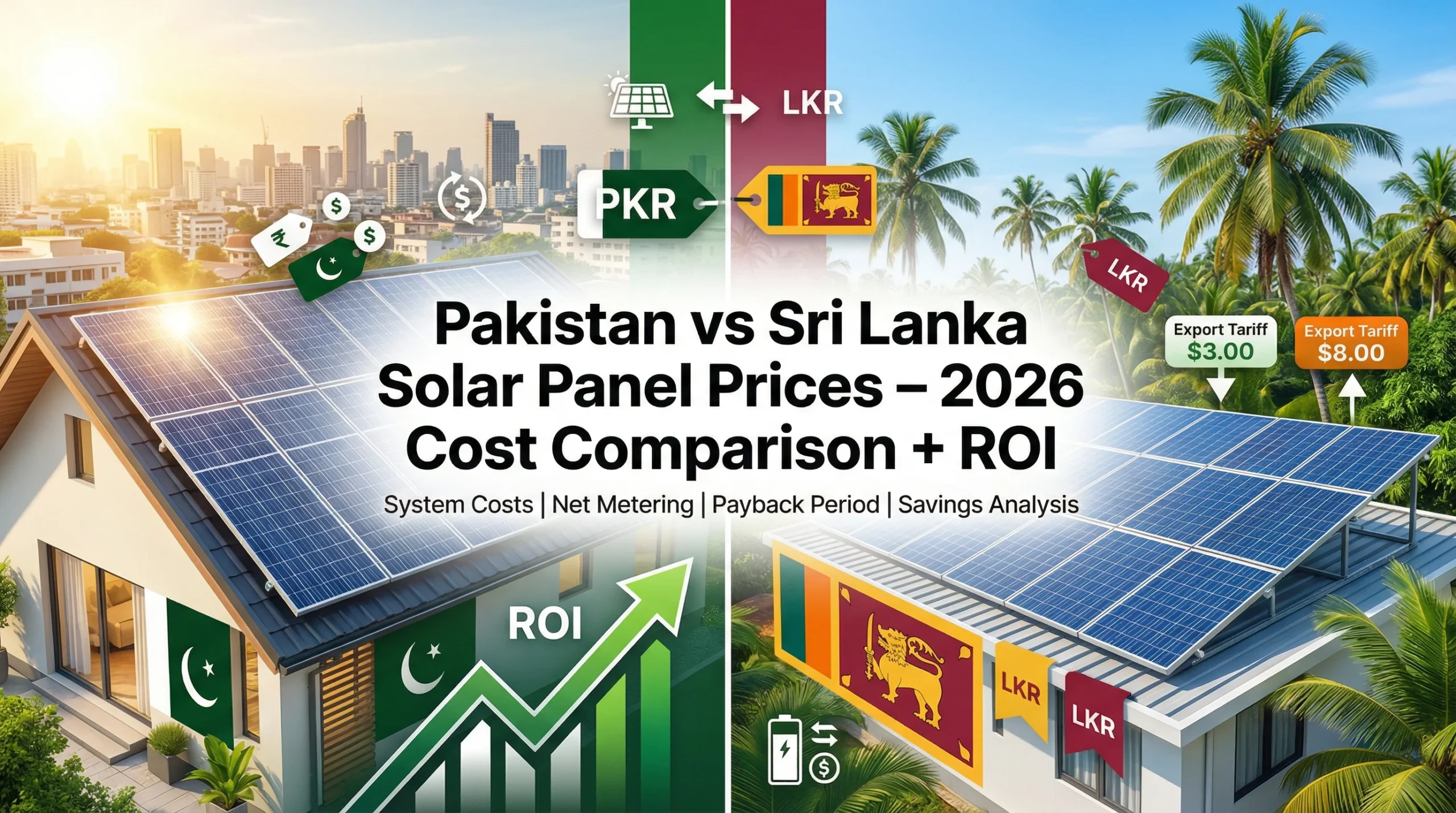
As of 2026, Pakistan and Sri Lanka are experiencing significant growth in solar energy adoption due to high electricity costs, power outages, and national renewable energy targets. Pakistan’s solar imports exceeded 50 GW since 2019, driven by high grid tariffs and a shift to decentralized solutions, with rooftop installations expected to meet daytime demand in some areas by 2024. Meanwhile, Sri Lanka aims for 70% renewable energy by 2030, with its renewable share already at over 63% by early 2024. Recent tariff hikes and a push for energy independence are fueling demand, despite high upfront costs. Both nations are leveraging solar energy to address energy crises, reduce fossil fuel imports, and enhance sustainability.
Read Also: Solar Panel Price in Afghanistan
2026 ஆம் ஆண்டு நிலவரப்படி, அதிக மின்சார செலவுகள், மின் தடைகள் மற்றும் தேசிய புதுப்பிக்கத்தக்க எரிசக்தி இலக்குகள் காரணமாக பாகிஸ்தானும் இலங்கையும் சூரிய சக்தி பயன்பாட்டை கணிசமாக அதிகரித்து வருகின்றன. 2019 முதல் பாகிஸ்தானின் சூரிய சக்தி இறக்குமதி 50 GW ஐ தாண்டியது, அதிக கிரிட் கட்டணங்கள் மற்றும் பரவலாக்கப்பட்ட தீர்வுகளுக்கு மாற்றப்பட்டதன் காரணமாக, கூரை நிறுவல்கள் 2024 ஆம் ஆண்டுக்குள் சில பகுதிகளில் பகல்நேர தேவையை பூர்த்தி செய்யும் என்று எதிர்பார்க்கப்படுகிறது. இதற்கிடையில், இலங்கை 2030 ஆம் ஆண்டுக்குள் 70% புதுப்பிக்கத்தக்க ஆற்றலை இலக்காகக் கொண்டுள்ளது, அதன் புதுப்பிக்கத்தக்க பங்கு ஏற்கனவே 2024 ஆம் ஆண்டின் தொடக்கத்தில் 63% க்கும் அதிகமாக உள்ளது. அதிக ஆரம்ப செலவுகள் இருந்தபோதிலும், சமீபத்திய கட்டண உயர்வுகள் மற்றும் எரிசக்தி சுதந்திரத்திற்கான உந்துதல் ஆகியவை தேவையை அதிகரிக்கின்றன. இரு நாடுகளும் எரிசக்தி நெருக்கடிகளை நிவர்த்தி செய்ய, புதைபடிவ எரிபொருள் இறக்குமதியைக் குறைக்க மற்றும் நிலைத்தன்மையை மேம்படுத்த சூரிய சக்தியைப் பயன்படுத்துகின்றன.
Price Comparison Overview (Table + USD conversion)
In 2026, solar panel prices rose in both Pakistan and Sri Lanka due to higher global material costs. Pakistan benefits from lower per-watt rates because of large Chinese imports, while Sri Lanka’s prices are higher and usually include full system costs. Exchange rates are about 1 USD ≈ 279.6 PKR and 1 USD ≈ 309.3 LKR.
| Category | Pakistan (PKR) | Pakistan (USD) | Sri Lanka (LKR) | Sri Lanka (USD) |
| Per Watt (Panel Only) | Rs. 28–40 | $0.10–0.14 | Rs. 180–250 (est.) | $0.58–0.81 |
| 585W Panel Example | Rs. 20,000–21,000 | $71.50–75.00 | Rs. 100,000–120,000 (est.) | $323–388 |
| 5kW System (Full Install) | Rs. 780,000–950,000 | $2,790–3,400 | Rs. 900,000–1,090,000 | $2,910–3,525 |
| 10kW System (Full Install) | Rs. 1,500,000–1,800,000 | $5,365–6,440 | Rs. 1,620,000–1,800,000 | $5,240–5,820 |
Detailed Country Sections Pak vs Sl
Pakistan Pricing Trends (Wattage, Brands, System Cost)
In 2026, Pakistan’s solar market has seen panel prices rise by up to Rs. 5,000 owing to increased global raw material costs and strong demand. Per-watt prices range from Rs. 28 (budget) to Rs. 40 (premium), with 585–720W panels being popular for residential use.
- Wattage Pricing: 585W: Rs. 20,000–21,000; 645W: Rs. 24,000–25,000; 720W: Rs. 30,000–35,000.
- Popular Brands: Longi (Hi-MO series, Rs. 23,653 for 635W), Trina (Rs. 16,500 for 550W), Canadian, Jinko.
- System Costs: 5kW: Rs. 780,000–950,000 (including inverter and installation); 10kW: from Rs. 1,500,000. ROI: 3–4 years, with monthly savings of Rs. 25,000–35,000 for 10kW systems.
Read Also: Solar System
Sri Lanka Pricing (System Sizes, Panel Cost, Brands, Net Metering)
Sri Lanka’s market prioritizes complete systems, with higher prices due to import duties and smaller operations. Rooftop solar leads, supported by net metering paying Rs. 17–20 per exported unit.
- System Costs: 2kW: Rs. 560,000; 5kW: Rs. 900,000–1,090,000; 10kW: Rs. 1,620,000+ (on-grid).
- Panel Prices: 590–610W: Rs. 100,000+; per watt ~Rs. 180–250.
- Popular Brands: Hayleys Solar, BAM Green, Sakura, Trina, Jinko.
- Net Metering: Credits at Rs. 17.46–20.90/unit; battery systems get Rs. 45.80/unit incentive. ROI: 4–6 years, with 5kW systems saving over Rs. 30,000 monthly.
Solar ROI Enterprise Calculator
Loan Financing
Installer Profit Estimator
Policy & Incentives Comparison
Pakistan: Moved to net billing in 2026 with surplus sold at Rs. 11–13/unit; new contracts are for 10 years. Focuses on stabilizing utilities, reducing ROI for new installations.
Sri Lanka: Maintains net metering with export rates of Rs. 15.50–22/unit and targets 3 GW solar by 2030. Offers incentives but may end net metering for new users amid a 13% tariff hike.
Comparison: Sri Lanka has better export incentives, while Pakistan prioritizes grid stability over consumer returns.
| Aspect | Pakistan | Sri Lanka |
| Net Metering / Sell-Back | Present but under reconsideration, with lower buyback rates affecting new users. | Active net metering and net accounting schemes with tariffs for excess generation. |
| Import Duties & Taxes | Higher sales tax and import cost fluctuations impact panel pricing. | Duty exemptions on certain capital goods may reduce costs for larger projects. |
| Government Support | State banks and financing options available; solar financing under renewable energy programs. | Policies facilitating grid connection and credits for small producers are attractive for growth. |
| Utility Tariff Comparisons | Domestic grid electricity tariffs are high; solar offsets offer major savings. | Solar can offset significant electricity costs with stable tariffs for sold units. |
Buyer’s Guide: Choosing Cost-Effective Panels
- Efficiency & Wattage: Choose 20–22% efficient panels (like Longi Hi-MO) for optimal output in limited spaces.
- Warranty & Durability: Select Tier-1 brands (Jinko, Trina) with a standard 25-year performance warranty, especially for humid climates.
- Local Support: In Pakistan, favor brands with widespread dealers (Canadian, Longi); in Sri Lanka, consider local companies like Hayleys for installation and maintenance.
- ROI Factors: Base calculations on local tariffs (Pakistan: Rs. 40+/unit; Sri Lanka: Rs. 45+/unit) and include net metering and battery options for off-peak savings.
- Financing: Seek 0% loans or leasing to lower initial costs.
- Avoid Pitfalls: Confirm certifications (IEC, Tier-1), obtain multiple quotes, and consider future policy impacts.
- Overall Investment: Solar is a viable investment in both countries, with Pakistan offering cost advantages and Sri Lanka providing incentives.
Conclusion
In 2026, both Pakistan and Sri Lanka are enhancing their solar energy initiatives to lower electricity expenses and boost energy security. Pakistan presents lower prices for panels and a more economical overall system setup, leading to a more affordable initial investment with quicker returns on investment in many scenarios. Sri Lanka has slightly elevated system costs, but its robust net metering incentives and consistent export rates enhance long-term profitability. Overall, investing in solar is a wise choice in both nations — Pakistan offers a greater cost benefit, whereas Sri Lanka provides improved export incentives.
2026 میں، پاکستان اور سری لنکا دونوں بجلی کے اخراجات کو کم کرنے اور توانائی کی حفاظت کو بڑھانے کے لیے اپنے شمسی توانائی کے اقدامات کو بڑھا رہے ہیں۔ پاکستان پینلز کے لیے کم قیمتیں اور زیادہ اقتصادی مجموعی نظام سیٹ اپ پیش کرتا ہے، جس کی وجہ سے بہت سے حالات میں سرمایہ کاری پر تیزی سے منافع کے ساتھ زیادہ سستی ابتدائی سرمایہ کاری ہوتی ہے۔ سری لنکا نے نظام کی لاگت میں قدرے اضافہ کیا ہے، لیکن اس کی مضبوط نیٹ میٹرنگ مراعات اور مستقل برآمدی شرحیں طویل مدتی منافع میں اضافہ کرتی ہیں۔ مجموعی طور پر، شمسی توانائی میں سرمایہ کاری دونوں ممالک میں ایک دانشمندانہ انتخاب ہے – پاکستان زیادہ لاگت کا فائدہ پیش کرتا ہے، جب کہ سری لنکا بہتر برآمدی مراعات فراہم کرتا ہے۔
FAQ’s
Is solar cheaper in Pakistan or Sri Lanka?
In 2026, solar installation costs in Pakistan are lower than in Sri Lanka, making it cheaper to install the same system capacity.
How much does a 5kW solar system cost in Sri Lanka?
A 5 kW on-grid solar system in Sri Lanka costs LKR 975,000–1,200,000 (around USD 3,000–3,750), including installation and equipment.
How long is the solar payback in Sri Lanka?
In Sri Lanka, residential solar systems typically have a payback period of 4–5 years, depending on savings and the availability of net metering.
Does Sri Lanka offer net metering?
Sri Lanka offers net metering and accounting, enabling consumers to offset electricity usage with solar generation and receive credits for excess electricity sent to the grid.