Solar Mini-Grids for Rural Electrification in 2026
Access to reliable electricity is a major challenge for rural communities, especially in developing regions. By 2026, solar mini-grids have become a sustainable solution to this issue, combining renewable energy with localized distribution. These systems are key to achieving the 2030 Sustainable Development Goals, particularly universal energy access. As costs decrease and technology advances, solar mini-grids are poised to grow, offering a faster and more cost-effective alternative to traditional grid extension for the over 600 million people in Sub-Saharan Africa without electricity. The article explores the concept, technology, benefits, challenges, and future outlook of solar mini-grids for rural electrification in 2026.
Read Also: Mini solar panel price in Pakistan

قابل اعتماد بجلی تک رسائی دیہی برادریوں کے لیے خاص طور پر ترقی پذیر خطوں میں ایک بڑا چیلنج ہے۔ 2026 تک، سولر منی گرڈز اس مسئلے کا ایک پائیدار حل بن چکے ہیں، جو قابل تجدید توانائی کو مقامی تقسیم کے ساتھ ملا رہے ہیں۔ یہ نظام 2030 کے پائیدار ترقی کے اہداف کو حاصل کرنے کے لیے کلیدی حیثیت رکھتے ہیں، خاص طور پر توانائی کی عالمی رسائی۔ لاگت میں کمی اور ٹیکنالوجی کی ترقی کے ساتھ، شمسی منی گرڈز بڑھنے کے لیے تیار ہیں، جو سب صحارا افریقہ میں بغیر بجلی کے 600 ملین سے زیادہ لوگوں کے لیے روایتی گرڈ کی توسیع کا تیز تر اور زیادہ لاگت والا متبادل پیش کرتے ہیں۔ مضمون 2026 میں دیہی بجلی کے لیے سولر منی گرڈز کے تصور، ٹیکنالوجی، فوائد، چیلنجز اور مستقبل کے نقطہ نظر کو تلاش کرتا ہے۔
What Are Solar Mini-Grids?
A solar mini-grid, or microgrid, is a localized electricity network powered primarily by solar photovoltaic (PV) panels, designed to supply electricity to a community, such as a village or rural settlement. Key components include:
- Solar PV panels for energy generation.
- Battery Energy Storage Systems (BESS) for storing excess energy.
- Inverters and controllers for power conversion and management.
- A distribution network to deliver electricity.
- Smart meters for billing and monitoring.
By 2026, advancements in battery technology, digital monitoring, and power electronics have improved the reliability and cost-effectiveness of solar mini-grids, which can serve 50–5,000 households. These systems provide higher-tier electricity suitable for productive uses, and while some mini-grids may incorporate diesel generators for backup, pure solar systems are becoming more common due to declining costs and enhanced efficiency.
Current Trends and Projections for 2026
The global mini-grid market is thriving, expected to reach $20–30 billion by 2025, with a CAGR of 13–18% through 2030. Solar energy’s share in this market has increased significantly, from 14% in 2018 to 59% in 2024. Sub-Saharan Africa has over 5,000 operational mini-grids, while initiatives like the World Bank’s Mission 300 aim to connect 300 million people to decentralized renewables by 2030. The Asia-Pacific region, particularly India and Southeast Asia, is also experiencing rapid growth. By 2026, advancements in technologies such as batteries, smart meters, and hybrid integration are expected to lower costs and enhance reliability.
The Importance of Solar Mini-Grids for Rural Electrification
- Addressing Energy Poverty: Solar mini-grids offer localized electricity solutions for rural areas far from national grids, making energy access more feasible.
- Supporting Sustainable Development: Access to electricity through solar mini-grids promotes improvements in healthcare, education, clean water, and economic activities, aligning with Sustainable Development Goal 7: Affordable and Clean Energy.
- Climate-Friendly Energy Solution: Solar mini-grids provide emission-free electricity, supporting countries in meeting climate commitments while improving energy access by 2026.
Technological Advancements in 2026
- Improved Battery Storage: By 2026, battery technologies like lithium-ion, sodium-ion, and lithium iron phosphate have become more affordable, safer, and longer-lasting, enabling 24/7 power supply from mini-grids with minimal interruptions.
- Smart Digital Management: AI and IoT technologies are widely integrated into mini-grid operations to predict energy demand, optimize battery usage, remotely detect faults, and reduce operational costs.
- Hybrid Mini-Grids: Many mini-grids now combine solar power with wind, small hydro, or backup generators, enhancing reliability during seasonal changes and improving overall system resilience.
Solar Mini-Grids in Pakistan (2026)
Reliable, affordable & clean energy powering rural Pakistan
Power Shortage
Rural Pakistan faces frequent load-shedding & grid gaps.
Solar Mini-Grids
Community-level solar systems replacing diesel generators.
Battery Storage
LFP batteries ensure night-time & backup power.
Lower Cost
Cheaper than grid extension & fuel-based generators.
0
People Affected0
Potential Villages0
% Solar Growth🧮 Solar Savings Calculator (PKR)
Economic and Social Benefits
- Economic Empowerment: Reliable electricity supports rural businesses, creating jobs, increasing incomes, and reducing rural-to-urban migration.
- Improved Healthcare and Education: Solar mini-grids enhance healthcare services and provide essential tools for education, such as lighting and refrigeration for vaccines.
- Gender and Social Inclusion: Access to electricity alleviates manual labor, enhances safety, and fosters opportunities for women-led enterprises and education.
Business Models and Financing in 2026
- Community-Owned Models: Local communities take ownership of and oversee mini-grids, often receiving technical assistance from NGOs or private enterprises. This approach fosters community involvement and promotes long-term sustainability.
- Private Sector and Public–Private Partnerships (PPPs): Private firms are responsible for the design, construction, and management of mini-grids within regulated frameworks, while governments offer subsidies, guarantees, or performance-based financing.
- Pay-As-You-Go (PAYG) Systems: Digital payment systems enable users to pay for electricity based on their usage, making energy services more accessible to low-income families.
Policy and Regulatory Environment
By 2026, numerous governments have acknowledged the significance of mini-grids and have put in place favorable policies, such as:
- Defined regulations for licensing and tariffs
- Rules for grid interconnection and compensation
Read Also: Pakistan’s New Solar Policies Explained 2026
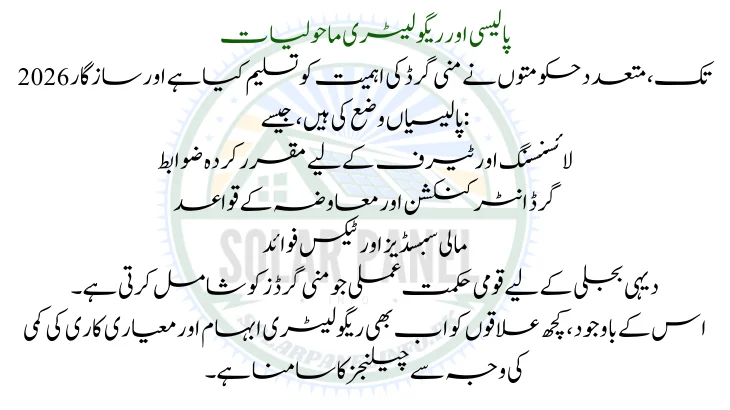
- Financial subsidies and tax benefits
- National strategies for rural electrification that incorporate mini-grids
Nevertheless, some areas still face challenges due to regulatory ambiguity and a lack of standardization.
Challenges Facing Solar Mini-Grids
- Significant Initial Expenses: Although prices are decreasing, the high initial investment continues to be a hurdle.
- Uncertainty in Demand: Inconsistent or low electricity demand can impact the financial sustainability.
- Shortage of Technical Expertise: Rural regions frequently lack skilled individuals for upkeep and operation.
- Risks from Policies: Future developments in the grid may jeopardize mini-grid investments if compensation frameworks are not well-defined.
Tackling these issues necessitates collaborative efforts from governments, investors, technology providers, and local communities.
Conclusion
By 2026, solar mini-grids have become a key solution for rural electrification in areas where extending the national grid is impractical. They provide clean, affordable electricity and promote economic growth. Despite challenges like high costs and regulatory risks, collaboration among governments, the private sector, and communities can help overcome these obstacles. Overall, solar mini-grids are essential for achieving universal energy access and sustainable rural development.
2026 تک، سولر منی گرڈ ان علاقوں میں دیہی بجلی کے لیے ایک اہم حل بن چکے ہیں جہاں قومی گرڈ کی توسیع ناقابل عمل ہے۔ وہ صاف، سستی بجلی فراہم کرتے ہیں اور اقتصادی ترقی کو فروغ دیتے ہیں۔ اعلی اخراجات اور ریگولیٹری خطرات جیسے چیلنجوں کے باوجود حکومتوں، نجی شعبے اور کمیونٹیز کے درمیان تعاون ان رکاوٹوں کو دور کرنے میں مدد کر سکتا ہے۔ مجموعی طور پر، سولر منی گرڈز توانائی کی آفاقی رسائی اور پائیدار دیہی ترقی کے حصول کے لیے ضروری ہیں۔
FAQ’s
Why are solar mini-grids important for rural electrification?
Solar mini-grids offer dependable electricity to remote areas where extending the grid is costly, fostering development in healthcare, education, and local businesses.
How do solar mini-grids differ from solar home systems?
Unlike solar home systems, mini-grids supply electricity to entire communities and support higher power uses such as productive and commercial activities.
Are solar mini-grids environmentally friendly?
They produce electricity using renewable solar power, which decreases dependence on fossil fuels and helps to lower greenhouse gas emissions.