Common Solar Panel Scams in Pakistan & How to Avoid Them in 2026
The solar energy market in Pakistan has seen significant growth due to rising electricity bills, frequent load-shedding, and lower global solar panel prices. This has led to increased rooftop installations in urban areas. However, the rapid expansion has also resulted in a rise in scams, including fake government schemes and low-quality equipment, causing homeowners to suffer financial losses. The article discusses common solar scams in Pakistan and offers practical tips to help consumers make informed and safe decisions in 2026.
Read Also: Climate Change Impact on Pakistan Solar Energy Production
بجلی کے بڑھتے ہوئے بلوں، بار بار لوڈ شیڈنگ اور سولر پینل کی عالمی قیمتوں میں کمی کی وجہ سے پاکستان میں شمسی توانائی کی مارکیٹ میں نمایاں نمو دیکھنے میں آئی ہے۔ اس کی وجہ سے شہری علاقوں میں چھتوں کی تنصیبات میں اضافہ ہوا ہے۔ تاہم، تیزی سے پھیلنے کے نتیجے میں گھوٹالوں میں بھی اضافہ ہوا ہے، جن میں جعلی سرکاری اسکیمیں اور کم معیار کے آلات شامل ہیں، جس سے گھر کے مالکان کو مالی نقصان اٹھانا پڑا ہے۔ مضمون میں پاکستان میں عام شمسی اسکیموں پر بحث کی گئی ہے اور 2026 میں صارفین کو باخبر اور محفوظ فیصلے کرنے میں مدد کرنے کے لیے عملی تجاویز پیش کی گئی ہیں۔
Why Solar Scams Are Rising in Pakistan
- Economic Factors: The rising costs of grid electricity, often exceeding PKR 50 per unit, have made solar energy an attractive alternative. Many users can expect payback periods as short as 3 to 4 years, making the investment in solar panels increasingly appealing.
- Import Boom: Recent tax exemptions on solar imports, set to last until mid-2025, have resulted in a surge of affordable solar panels in the market. However, this influx has also led to the availability of counterfeit products, posing a risk to consumers.
- Lack of Regulation: The solar installation sector currently lacks robust regulation, with numerous installers operating without proper registration. There is also a significant gap in public awareness regarding quality standards, which can affect the reliability of solar installations.
- Government Schemes Misuse: Initiatives like Punjab’s Roshan Gharana, which provides free or subsidized solar solutions for low-usage households, have unfortunately been exploited. This has resulted in the emergence of fake websites and deceptive advertisements aimed at misleading consumers.
Selling Fake or B-Grade Solar Panels as A-Grade
When purchasing solar panels, it’s important to be cautious of sellers who market B-grade or refurbished panels as if they are brand-new A-grade panels. While these products may appear new, they often come with several drawbacks, including:
- Lower Efficiency: B-grade panels typically do not convert sunlight to electricity as effectively as A-grade panels.
- Shorter Lifespan: These panels may have a reduced operational lifespan, leading to earlier replacement costs.
- Faster Power Degradation: B-grade panels may lose their energy output capability more quickly over time compared to their A-grade counterparts.
Tips for Avoiding Counterfeit Products
To ensure you are purchasing high-quality solar panels, consider these guidelines:
- Verify Serial Numbers: Always check the panel’s serial number against the manufacturer’s official website to confirm authenticity.
- Request Documentation: Ask for original datasheets and warranty cards to ensure you are getting the expected quality and coverage.
- Choose Reputable Brands: Purchase only from Tier-1 manufacturers, such as Longi, Jinko, Trina, Canadian Solar, and JA Solar, known for their reliable products.
- Be Wary of Pricing: Avoid offers that seem unusually cheap, as they may indicate the product is not of high quality.
By following these recommendations, you can make an informed decision and invest in solar panels that provide reliable performance and longevity.
Misleading Solar Panel Power Ratings
Some solar panel installers may promise higher wattage output than the panels can realistically achieve, particularly in the challenging weather conditions often experienced in Pakistan.
Tips for Avoiding Deceptive Practices
- Request Clarification on Performance: Inquire about the difference between Standard Test Conditions (STC) and real-world output to get a more accurate understanding of panel performance.
- Choose Wisely: Opt for installers who focus on providing performance estimates based on realistic assessments, rather than guarantees that may not be achievable.
- Be Aware of Environmental Factors: Recognize that factors such as dust accumulation, high temperatures, and shading can naturally diminish the energy output of solar panels.
By staying informed and asking the right questions, you can make better decisions and avoid falling victim to misleading claims in the solar panel market.
Fake or Invalid Warranties
When considering home installation services, it’s important to be cautious about warranty offers. Some companies may advertise long warranties, such as 25 years, that aren’t actually backed by the manufacturer or may vanish after the installation process is completed.
Tips for Avoiding Warranty Issues
- Check Warranty Source: Always ensure that the warranty is backed by the manufacturer rather than just being provided by the installer.
- Research Warranty Terms: Look up the warranty terms online to verify their validity and coverage details.
- Choose Established Suppliers: Opt for well-known suppliers with physical offices, as they are more likely to honor their warranties and provide better customer support.
By following these guidelines, you can make more informed decisions and protect your investment in home installations.
Net Metering Fraud
When engaging with installers for net metering, it’s essential to be aware of potential scams that can lead to delays and financial loss. Here are some common issues:
- Extended Delays: Some installers may take full payment but then take months to proceed with the installation.
- Lack of Documentation: In certain cases, installers fail to submit the necessary documents to the Distribution Company (DISCO), which can further postpone the process.
- Non-Compliant Equipment: Unscrupulous installers might use equipment that hasn’t been approved, putting the entire system’s reliability at risk.
Tips to Protect Yourself
To ensure a smoother experience and safeguard your investment, consider the following precautions:
- Verify Equipment: Always ask for a list of NEPRA-approved inverters before making any commitments.
- Payment Structure: Instead of paying all fees upfront, opt to pay net metering fees in installments. This approach can provide more security.
- Request Documentation: Be proactive in demanding receipts for your application and regular updates on tracking the status of your submission.
By staying informed and vigilant, you can better protect yourself from potential scams in the net metering process.
Cheap or Fake Inverters
In the realm of solar energy systems, one common issue is the installation of low-quality or counterfeit inverters instead of reputable brands. This often leads to frequent breakdowns and unreliable performance.
How to Protect Yourself
To avoid falling victim to this problem, consider these steps:
- Verify the Inverter: Always check the inverter’s model number and scan the QR code to confirm its authenticity.
- Opt for Trusted Brands: Choose inverters from established manufacturers such as Huawei, Solis, GoodWe, or Sungrow, known for their quality and reliability.
- Confirm Warranty: Ensure that your warranty is valid by confirming it through the official distributor, providing you peace of mind and protection against defects.
By following these tips, you can safeguard your investment and ensure the efficiency of your solar energy system.
Common Solar Panel Scams in Pakistan – 2026
Stay informed. Protect your investment. Choose solar wisely.
Why Solar Scams Are Increasing
Key reasons behind rising fraud cases
High Electricity Costs
- Electricity exceeds PKR 50/unit
- Solar ROI looks attractive
Import Boom
- Tax exemptions until 2025
- Influx of counterfeit panels
Weak Regulation
- Unregistered installers
- Lack of quality awareness
Fake Govt Schemes
- Roshan Gharana misuse
- Fake ads & websites
Most Common Solar Scams
What homeowners should watch out for
Fake A-Grade Panels
- B-grade sold as new
- Lower efficiency & lifespan
Misleading Wattage
- STC vs real output hidden
- Overpromised generation
Fake Warranties
- Installer-only guarantees
- No manufacturer backing
Net Metering Fraud
- Delays & missing documents
- Non-approved equipment
Fake Inverters
- Frequent breakdowns
- Invalid warranties
Battery Scams
- Old or refurbished units
- Lower capacity than claimed
How to Protect Yourself
Smart steps before installing solar
Verify Installer
- Physical office & NTN
- AEDB / PEC registration
Written Agreements
- Itemized quotations
- Receipts & contracts
Safe Payments
- 30–50% advance only
- Milestone-based payments
Realistic ROI
- 3–5 year payback
- Avoid false promises
Overpriced Solar Systems
Many customers encounter overcharging when it comes to solar installation services. Some installers may inflate costs in the following areas:
- Panel Prices: The price of solar panels can be marked up considerably.
- Mounting Structure Costs: Charges for the structures that hold the panels may be excessive.
- Wiring and Accessories: Additional components needed for installation can also be overpriced.
Tips for Avoiding Overcharges
To protect yourself and ensure you receive a fair price, consider the following strategies:
- Obtain Multiple Quotations: Request at least three different estimates from various installers.
- Request Itemized Pricing: Ask for a breakdown of costs to understand what you’re being charged for specifically.
- Compare Market Prices per Watt: Research and compare the current market rates for solar installations to gauge a reasonable price.
By following these steps, you can make a more informed decision and avoid potential scams in your solar installation process.
No Proper System Design
A common issue with some installation services is the failure to conduct thorough site surveys before installation. This oversight can lead to critical factors being ignored, such as:
- Roof Direction: The angle and orientation of your roof can significantly impact solar panel efficiency.
- Shading: Nearby trees, buildings, or other obstructions can cast shadows that diminish energy production.
- Load Requirements: It’s essential to evaluate the electrical load requirements of your home to ensure the system can handle the demand.
How to Protect Yourself
To avoid falling victim to these problematic practices, consider the following recommendations:
- Request a Comprehensive Site Survey: Ensure that the installer conducts a detailed assessment of your property.
- Ask for a Load Calculation Report: This report will give you insight into the expected energy needs and system capacity.
- Be Cautious of Rushed Installations: Take your time in selecting an installer who prioritizes thoroughness over speed.
Battery Scams in Hybrid Systems
Be aware that some sellers may offer old, refurbished, or low-capacity batteries while marketing them as new lithium or tubular batteries. This practice can lead to unexpected performance issues and safety concerns.
Tips to Avoid Scams
- Check the Manufacturing Date: Always inspect the manufacturing date of the battery to ensure it’s recent.
- Verify Cycle Life and Capacity: Look for information on the battery’s cycle life and its capacity to ensure it meets your needs.
- Purchase from Authorized Dealers: To guarantee quality and authenticity, only buy batteries from reputable and authorized dealers.
By following these tips, you can better protect yourself from battery fraud and make informed purchasing decisions.
No After-Sales Support
After installation, some companies may exhibit troubling behaviors, such as:
- No longer responding to customer calls
- Refusing to perform maintenance or necessary repairs
How to Avoid These Issues
To protect yourself, consider the following tips:
- Look for Google reviews and customer feedback to gauge the company’s reputation.
- Opt for companies that offer service agreements to ensure ongoing support.
- Be cautious of individuals operating without a registered business, as they may not provide reliable service.
Unrealistic Savings Promises
Common Misleading Claims
Some installers may promise zero electricity bills, which can be unrealistic for most homeowners.
- Claims of 100% backup power without the use of batteries should be approached with caution, as this often does not reflect the limitations of the technology.
- Some installers may suggest a full return on investment (ROI) within just 1–2 years, which is often overly optimistic.
How to Protect Yourself
- Always approach claims that seem too good to be true with skepticism.
- Request a more realistic projection for ROI, typically ranging from 3 to 5 years, to better understand what you can expect.
- Take the time to familiarize yourself with the limitations of solar systems to make an informed decision.
By staying informed and asking the right questions, you can navigate the process of installing solar energy more effectively and avoid potential pitfalls.
How to Avoid Solar Panel Scams
- Research the Company: Verify physical office, NTN number, and registration with AEDB or PEC. Check reviews and ensure a long-term presence (5+ years). Avoid solely online deals without in-person verification.
- Insist on Quality Components: Use panels from reputable brands (e.g., Longi, Jinko). Verify serial numbers and demand original warranties (25-30 years for panels, 10-12 years for inverters).
Read Also: Will Solar Panel Price Drop in Pakistan in 2026?
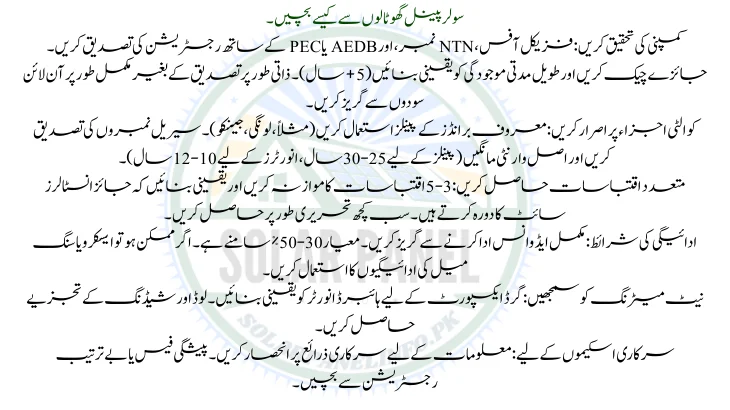
- Get Multiple Quotes: Compare 3-5 quotes and ensure legitimate installers conduct site visits. Get everything in writing.
- Payment Terms: Avoid paying the full advance; the standard is 30-50% upfront. Use escrow or milestone payments if possible.
- Understand Net Metering: Ensure a hybrid inverter for grid export; obtain load and shading analyses.
- For Government Schemes: Rely on official sources for information; avoid advance fees or random registrations.
Key Tips to Stay Safe When Buying Solar in Pakistan
- Always confirm the authenticity of the brand
- Utilize written agreements and receipts
- Steer clear of payments made solely in cash
- Inquire about technical details prior to signing
- Prioritize experience rather than low cost
Conclusion
The increasing popularity of solar energy in Pakistan has made rooftop systems a wise choice, but it has also led to the emergence of fraud. Homeowners need to be cautious of counterfeit A-grade panels, illegitimate warranties, net metering scams, and exaggerated savings claims. By thoroughly researching installers, confirming the authenticity of equipment, demanding written agreements, and steering clear of offers that seem too good to be true, consumers can safeguard their investment. In 2026, making well-informed decisions, fostering transparency, and selecting experienced, trustworthy providers will be the best strategies against solar panel scams in Pakistan.
پاکستان میں شمسی توانائی کی بڑھتی ہوئی مقبولیت نے چھتوں کے نظام کو ایک دانشمندانہ انتخاب بنا دیا ہے، لیکن اس سے دھوکہ دہی بھی سامنے آئی ہے۔ گھر کے مالکان کو جعلی A-گریڈ پینلز، ناجائز وارنٹیوں، نیٹ میٹرنگ کے گھوٹالوں، اور مبالغہ آمیز بچت کے دعووں سے ہوشیار رہنے کی ضرورت ہے۔ انسٹالرز کی مکمل تحقیق کر کے، آلات کی صداقت کی تصدیق کر کے، تحریری معاہدوں کا مطالبہ کر کے، اور ایسی پیشکشوں سے گریز کر کے جو بہت اچھی لگتی ہیں، صارفین اپنی سرمایہ کاری کی حفاظت کر سکتے ہیں۔ 2026 میں، باخبر فیصلے کرنا، شفافیت کو فروغ دینا، اور تجربہ کار، بھروسہ مند فراہم کنندگان کا انتخاب پاکستان میں سولر پینل گھوٹالوں کے خلاف بہترین حکمت عملی ہو گی۔
FAQs
How can I verify if solar panels are genuine A-grade?
Verify the serial number on the manufacturer’s official site, obtain original datasheets and warranty information, and purchase exclusively from Tier-1 brands via authorized distributors.
Is it safe to pay the full amount upfront for solar installation?
No. A safer approach is to use milestone-based payments, typically 30–50% upfront, with the remaining balance paid after installation and approval.
What is a realistic payback period for solar systems in Pakistan?
Typically, a realistic return on investment (ROI) spans 3 to 5 years, depending on system size, usage, and net metering approval.