Will Solar Panel Price Drop in Pakistan in 2026?
Pakistan’s solar energy sector is transitioning to a mainstream solution due to power shortages and rising electricity costs, which have surged 155% in three years. By December 2025, the country is expected to have over 18 GW of installed solar capacity, potentially contributing 20% of national electricity by 2026. Affordable imports and grassroots adoption fuel this growth. However, while a slight decline in solar panel prices (3–5%) is possible, various factors may restrict significant decreases. The analysis focuses on market data, trends, and forecasts regarding solar pricing in Pakistan.
Read Also: Expected solar panel prices in Pakistan in 2026

پاکستان کا شمسی توانائی کا شعبہ بجلی کی قلت اور بڑھتی ہوئی بجلی کی قیمتوں کی وجہ سے مرکزی دھارے کے حل کی طرف منتقل ہو رہا ہے، جس میں تین سالوں میں 155 فیصد اضافہ ہوا ہے۔ دسمبر 2025 تک، ملک میں 18 گیگا واٹ سے زیادہ شمسی توانائی کی تنصیب کی توقع ہے، جو کہ 2026 تک قومی بجلی کا 20 فیصد حصہ ڈالے گی۔ تاہم، جبکہ سولر پینل کی قیمتوں میں معمولی کمی (3–5%) ممکن ہے، مختلف عوامل نمایاں کمی کو روک سکتے ہیں۔ تجزیہ پاکستان میں شمسی قیمتوں کے حوالے سے مارکیٹ کے اعداد و شمار، رجحانات اور پیشین گوئیوں پر مرکوز ہے۔
Current Solar Panel Prices in Pakistan (Late 2025)
As of early December 2025, solar panel prices in Pakistan have significantly decreased, averaging PKR 27–45 per watt for A-grade modules compared to PKR 50–100 per watt five years ago, due to global oversupply and competition from Chinese manufacturers. A typical 5kW residential system costs between PKR 780,000 and PKR 950,000, while B-grade options can save 10–20%.
Popular brands and their prices per watt include:
- Longi Hi-MO X10: PKR 31–38.5
- Jinko Solar: PKR 29.50–31
- Canadian Solar: PKR 32.57
- Trina Solar: PKR 29
- Local/B-grade (e.g., Astro Energy): PKR 19–26
Karachi has lower logistics costs, while cities like Lahore and Islamabad face price premiums. A 10kW system for small businesses ranges from PKR 1.5–2.5 million, with a payback period of 4–6 years at PKR 65/kWh grid rates.
| Brand/Model | Wattage | Price per Watt (PKR) | Full Panel Price (PKR) | Warranty (Years) |
| Longi Hi-MO X10 | 700W | 31–38.5 | 21,700–26,950 | 25 |
| Jinko N-Type | 620W | 29.50–31 | 18,290–19,220 | 12–25 |
| Canadian TopCon | 550W | 32.57 | 17,914 | 25 |
| Trina N-Type | 700W | 29 | 20,300 | 15–25 |
| Astro Energy (B-grade) | 550W | 19–26 | 10,450–14,300 | 10–12 |
Global Solar PV Trends: A Mixed Bag for 2026
Pakistan’s solar market is impacted by global trends, particularly China’s role in solar module production. After a price war in early 2025, spot prices dropped to $0.07–0.09/W but are expected to rise to $0.095/W in Q4 2025 due to factors like higher polysilicon prices. A slight dip to $0.083–0.086/W is forecasted for Q1 2026, but prices will remain above 2024 levels. Q2 2026 is expected to stabilize around $0.085/W, with global solar additions reaching 753 GW. Prices in PKR may stay between PKR 23–24, causing minimal consumer changes. Advances in technology could lead to ongoing price reductions and market opportunities.
| Period | Global TOPCon Price (USD/W) | Equivalent PKR/W (est.) | YoY Change |
| Q4 2025 | 0.086 | 23.90 | +9% |
| Q1 2026 | 0.083–0.086 | 23.07–23.90 | -1–3% |
| Q2 2026 | 0.085 | 23.63 | Stable |
| Full 2026 | 0.082–0.090 | 22.80–25.02 | +3–5% overall |
Pakistan’s Solar Market Outlook: Boom Meets Bottlenecks
Pakistan’s solar sector is rapidly expanding, with installed capacity expected to grow from 2.07 GW in 2025 to 13.97 GW by 2030 (46.55% CAGR). Rooftop solar could surpass grid demand in cities like Lahore and Faisalabad by 2026.
Read Also: Pakistan’s New Solar Policies Explained 2026
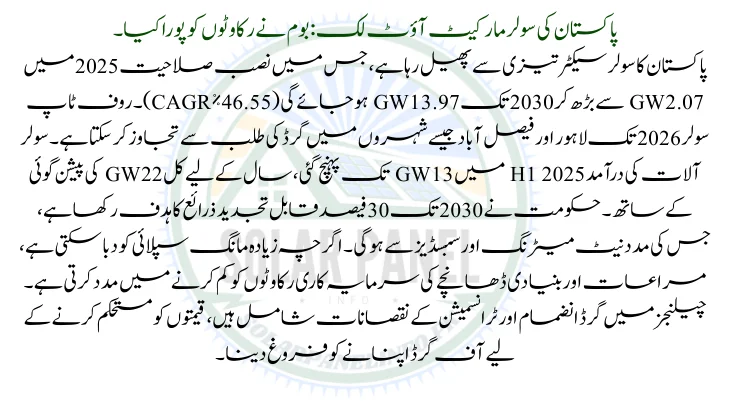
Solar equipment imports reached 13 GW in H1 2025, with a total forecast of 22 GW for the year. The government targets 30% renewables by 2030, supported by net metering and subsidies. While high demand may strain supply, incentives and infrastructure investments help reduce barriers. Challenges include grid integration and transmission losses, promoting off-grid adoption to stabilize prices.
Will Solar Panel Prices Drop in Pakistan in 2026?
An interactive infographic summarizing prices, trends, risks, and opportunities in Pakistan’s solar market.
Market Snapshot
By end of 2025 Pakistan crossed 18 GW solar capacity. Solar may contribute 20% of electricity in 2026.
Price Forecast 2026
Only a 3–5% decline expected. Prices likely to remain stable due to global supply controls and taxes.
Why Solar Still Wins
Electricity tariffs jumped 155% in 3 years. Solar payback remains 4–6 years.
Current Panel Prices (Late 2025)
| Brand | PKR / Watt |
|---|---|
| Jinko Solar | 29.5 – 31 |
| Longi Hi-MO X10 | 31 – 38.5 |
| Trina N-Type | 29 |
| Canadian Solar | 32.57 |
| B-Grade Panels | 19 – 26 |
Global Trends
Price Forces
Bullish: Oversupply, tech efficiency, vendor competition
Bearish: VAT removal, PKR volatility, polysilicon costs
Final Verdict
2026 will not bring major solar price drops in Pakistan. However, stable prices + rising grid tariffs make early installation the smarter financial choice.
Key Factors Influencing Prices in 2026
- Global Supply Chain and China Policies: The removal of VAT rebates increases export costs by about 13%, while production cuts may balance demand. Exchange rate fluctuations could raise import bills by 5–10%.
- Local Demand and Competition: High adoption rates (18,000 MW installed) lead to bulk imports, lowering margins. Increased vendor competition in Karachi and Lahore may result in 2–4% savings.
- Import Duties and Logistics: An 18% sales tax and duties remain, but efficiencies in Karachi ports help mitigate costs. Fuel expenses for inland transport add PKR 1–2/W regionally.
- Technology and Quality: Transition to efficient N-type technology (23%+ efficiency) increases initial costs but reduces system size requirements. Longer warranty periods justify higher prices, while B-grade options help maintain lower entry-level prices.
- Government Interventions: Expansions in net metering and farmer subsidies may increase volume and limit price rises, though outdated grid infrastructure poses risks.
- Risks: Geopolitical tensions and raw material price spikes are potential risks, but experts predict steady growth without major volatility.
| Factor | Bullish (Price Drop) | Bearish (Price Rise) |
| Global Supply | Oversupply clears; tech advances | VAT removal; polysilicon +48% |
| Local Demand | High volume compresses margins | Explosive growth strains imports |
| Policies | Subsidies/net metering | Duties/taxes unchanged |
| Logistics | Improved BRI infrastructure | PKR volatility; fuel costs |
Conclusion
In 2026, solar panel prices in Pakistan are expected to remain stable with only a minor decline of 3–5%. Global influences like China’s production changes, rising polysilicon costs, and VAT policy will prevent significant price drops. High local demand, a growing rooftop market, and steady imports will stabilize prices. Solar energy will continue to be cost-effective as electricity tariffs rise, making early investment more beneficial for buyers. Overall, 2026 will see price stability rather than sharp declines in the solar market.
2026 میں، پاکستان میں سولر پینل کی قیمتیں صرف 3-5% کی معمولی کمی کے ساتھ مستحکم رہنے کی توقع ہے۔ عالمی اثرات جیسے چین کی پیداواری تبدیلیاں، پولی سیلیکون کی بڑھتی ہوئی لاگت، اور VAT پالیسی قیمتوں میں نمایاں کمی کو روکے گی۔ زیادہ مقامی مانگ، بڑھتی ہوئی چھت کی مارکیٹ، اور مستحکم درآمدات قیمتوں کو مستحکم کریں گی۔ بجلی کے نرخوں میں اضافے کے ساتھ ہی شمسی توانائی لاگت سے موثر رہے گی، جس سے خریداروں کے لیے ابتدائی سرمایہ کاری زیادہ فائدہ مند ہوگی۔ مجموعی طور پر، 2026 میں شمسی مارکیٹ میں تیزی سے گراوٹ کے بجائے قیمتوں میں استحکام نظر آئے گا۔
FAQ’s
Will solar panel prices drop in Pakistan in 2026?
A slight decline of 3–5% is possible, but significant drops are unlikely due to global supply adjustments, taxes, and increasing production costs.
Is 2026 a good year to install solar in Pakistan?
Yes. Even if prices remain stable, high electricity rates mean solar systems offer quick payback (4–6 years) and significant long-term savings.
Which solar brands offer the best value in Pakistan?
Brands like Longi, Jinko, Canadian Solar, and Trina are known for efficiency and durability, while Astro Energy B-grade is a budget-friendly option with decent performance.