How 2026 Policies Will Impact Rooftop Solar Returns in Pakistan
Pakistan’s rooftop solar sector has rapidly grown, reaching over 5 GW in net-metering capacity, with projections of 6 GW by mid-2026. However, upcoming 2026 policy reforms addressing grid stability may impact the return on investment (ROI) for solar installations. These changes could dampen short-term interest but encourage sustainable solar integration. The article analyzes the current rooftop solar landscape, expected policy shifts, their effects on ROI, and implications for consumers and the energy grid.
Read Also: Future of Solar Panels in Pakistan in 2026

پاکستان کے روف ٹاپ سولر سیکٹر نے تیزی سے ترقی کی ہے، نیٹ میٹرنگ کی صلاحیت 5 گیگاواٹ سے زیادہ تک پہنچ گئی ہے، 2026 کے وسط تک 6 گیگا واٹ کے تخمینے کے ساتھ۔ تاہم، آئندہ 2026 پالیسی اصلاحات جو گرڈ کے استحکام کو حل کرتی ہیں، شمسی تنصیبات کے لیے سرمایہ کاری پر منافع (ROI) کو متاثر کر سکتی ہیں۔ یہ تبدیلیاں قلیل مدتی دلچسپی کو کم کر سکتی ہیں لیکن پائیدار شمسی انضمام کی حوصلہ افزائی کر سکتی ہیں۔ مضمون میں چھت کے موجودہ شمسی منظر نامے، متوقع پالیسی کی تبدیلیوں، ROI پر ان کے اثرات، اور صارفین اور توانائی کے گرڈ کے لیے مضمرات کا تجزیہ کیا گیا ہے۔
The Current Landscape of Rooftop Solar in Pakistan
Pakistan’s solar energy landscape has drastically changed, with solar now contributing significantly to daytime generation. Key factors influencing this growth include:
- High Electricity Tariffs and Outages: A 155% increase in tariffs over three years and frequent blackouts have prompted users to adopt solar energy.
- Net Metering Incentives: Introduced in 2015, net metering allows users to offset grid power costs with surplus energy exported back to the grid, leading to quick payback periods for users.
- Declining Costs: The price of solar panels has dropped significantly, allowing for massive imports of solar technology.
- Sector-Specific Growth: The agriculture sector has particularly benefited, with a shift from diesel to solar pumps, while industries and residential users also adopt solar to manage costs.
- Attractive ROI: Residential solar systems offer a return on investment of 25-35%, with breakeven achieved in 3-4 years.
Key Policy Changes Coming in 2026
As Pakistan’s rooftop solar capacity is set to surpass grid limits in key industrial areas by 2026, the government and NEPRA have introduced reforms effective from January 2026 for new installations. Key changes include:
- Net Billing/Gross Metering: Transitioning from net metering to net billing, where excess power is sold to the grid at fixed rates (Rs10-13 per kWh), while purchases remain at retail rates (Rs65-70 per kWh).
- Reduced Buyback Rates and Agreement Terms: Export tariffs reduced by up to 63% (to Rs10-13/kWh) and agreement durations shortened from 7 to 5 years.
- Licensing and Capacity Restrictions: Systems up to 25 kW now require NEPRA licensing, with capacity limited to a 1:1 ratio to sanctioned load and higher technical standards enforced.
- Tax Measures on Imports: An 18% GST on imported solar panels is introduced to support domestic manufacturing, affecting costs for end-users.
- Grid Maintenance Fees and Surplus Management: New fees for large solar users due to expected daytime surpluses, with excess exports credited to future bills instead of cash payouts.
These reforms aim to ensure fiscal sustainability, enhance grid management, and align solar compensation with actual costs.
Rooftop Solar Policies & ROI in Pakistan (2026)
Key 2026 Policy Changes
Net Billing / Gross Metering
Excess solar power will be sold to the grid at fixed rates (Rs10-13/kWh) instead of offsetting retail rates (Rs65-70/kWh).
Reduced Buyback & Agreement Terms
Export tariffs cut by 63%, agreement duration reduced from 7 to 5 years.
Licensing & Capacity Restrictions
Systems above 25 kW require NEPRA licensing; capacity limited to 1:1 ratio to sanctioned load.
Import GST
An 18% GST on imported solar panels will increase upfront costs for residential and commercial users.
Grid Fees & Surplus Management
Excess energy credited to future bills; fees for large solar users introduced to manage daytime surpluses.
Impact on Rooftop Solar ROI
Investor Recommendations
Battery Storage
Maximize self-consumption and energy availability during outages.
Optimize System Size
Avoid oversized export-heavy systems to maintain ROI.
Monitor Policies
Stay updated with NEPRA and DISCO regulations for strategic planning.
Early Investments
Install solar before restrictive policies take effect to secure better returns.
Financing and Incentives Policy in 2026
Green Financing & Bank Loans
- The State Bank of Pakistan (SBP) plans to offer low-interest green energy loans and Islamic financing for solar energy.
- Benefits include reduced upfront costs and improved affordability for middle-income households.
Corporate and Commercial Incentives
- Ongoing policies may provide accelerated depreciation for businesses and tax credits for renewable energy adoption.
- These measures are expected to result in a strong ROI for commercial rooftop solar and quicker breakeven for SMEs and industries.
Role of Battery Storage in Future ROI
By 2026, the following trends are expected due to falling battery prices and policy changes:
- Increased adoption of hybrid solar systems
- Greater grid independence (either partial or full)
- Improved return on investment (ROI)
Read Also: Pakistan’s New Solar Policies Explained 2026
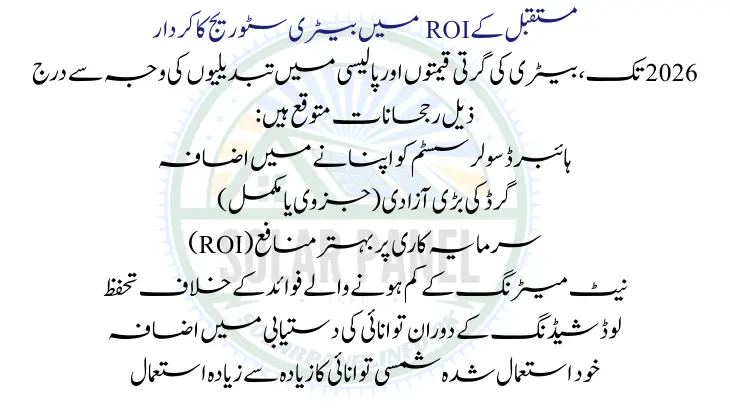
- Protection against diminished net metering benefits
- Enhanced energy availability during load-shedding
- Maximization of self-consumed solar energy
Analyzing the Impact on Rooftop Solar ROI
ROI Calculation for Rooftop Solar: ROI is determined by (Annual Savings + Export Revenue – Maintenance Costs) / Initial Investment, typically as a percentage or payback period.
Pre-2026 Regime: A 10 kW system can yield Rs300,000-400,000 in annual value, resulting in a 25-40% ROI and a payback period of around 3 years.
Negative Impacts of 2026 Changes
- Lower Export Revenue: Reduced buyback rates significantly decrease earnings from surplus exports.
- Higher Upfront Costs: An added 18% GST increases costs, reducing ROI to 15-25% and extending payback to 4-6 years.
- Licensing and Compliance Costs: Additional fees may add 5-10% to overall costs.
- Overall ROI Decline: New residential users may experience a 30-50% decline in ROI, making solar less appealing for export-heavy setups.
Positive Aspects and Mitigations
- Focus on Self-Consumption: Savings from avoiding high grid purchases remain beneficial, especially when paired with battery storage.
- Market Drivers: Rising tariffs and consistent outages uphold solar’s value proposition. Off-grid or hybrid systems may maintain current ROI levels.
Challenges and Risks
While the potential for growth is significant, several risks must be addressed:
- Policy Uncertainty: Fluctuations in regulations can create an unpredictable environment for investors.
- Grid Congestion Issues: Increasing demand for renewable energy may lead to congestion in the electrical grid, affecting efficiency.
- Delays in Net Metering Approvals: Slow processes in approving net metering can hinder the adoption of solar energy.
- Lack of Standardized Solar Quality Controls: Without consistent quality standards, the reliability and performance of solar products could be compromised.
Tackling these challenges will be essential to maintaining investor confidence in the renewable energy sector.
Strategic Recommendations for Solar Investors
To enhance ROI in 2026 and future years:
- Focus on designing systems that emphasize self-consumption.
- Explore the integration of battery storage solutions.
- Steer clear of excessively large solar systems.
- Keep an eye on updates from NEPRA and DISCO policies.
- Make early investments prior to the implementation of restrictive policies.
Conclusion
In 2026, policy changes in Pakistan’s rooftop solar sector are expected to shift from net metering to net billing, with lower buyback rates and stricter licensing and taxation. While these changes may reduce ROI for systems focused on exports, they will not eliminate the economic viability of rooftop solar. The emphasis will shift towards self-consumption, especially benefiting commercial and industrial users due to rising electricity prices and frequent outages. Overall, rooftop solar remains a viable energy option for adaptable investors and consumers.
2026 میں، پاکستان کے روف ٹاپ سولر سیکٹر میں پالیسی تبدیلیوں کی توقع ہے کہ نیٹ میٹرنگ سے نیٹ بلنگ کی طرف منتقل ہو جائیں گے، کم بائ بیک ریٹ اور سخت لائسنسنگ اور ٹیکس کے ساتھ۔ اگرچہ یہ تبدیلیاں برآمدات پر مرکوز نظاموں کے لیے ROI کو کم کر سکتی ہیں، لیکن وہ چھت کے شمسی توانائی کی اقتصادی استحکام کو ختم نہیں کریں گی۔ اس کا زور خود استعمال کی طرف بڑھے گا، خاص طور پر بجلی کی بڑھتی ہوئی قیمتوں اور بار بار بندش کی وجہ سے تجارتی اور صنعتی صارفین کو فائدہ پہنچے گا۔ مجموعی طور پر، روف ٹاپ سولر قابل عمل سرمایہ کاروں اور صارفین کے لیے قابل عمل توانائی کا اختیار ہے۔
FAQ’s
Will rooftop solar still be profitable in Pakistan after 2026?
Solar systems may see a decline in ROI when heavily reliant on exports, but they remain profitable due to high grid electricity tariffs and savings from self-consumption.
Who will be most affected by the 2026 policy changes?
Residential users with oversized systems designed mainly for exporting power will be most affected, while commercial and hybrid systems will face less impact.
How can solar users protect their ROI under the new policies?
By optimizing system size for personal use, adding battery storage, and decreasing reliance on grid exports, users can achieve strong long-term returns.